What Is a Neural Network? A Beginner’s Guide to the AI Brains Behind Modern Technology
A neural network is a machine learning model that recognizes patterns by mimicking how biological neurons work. It powers facial recognition, voice assistants, medical diagnostics, and self-driving cars. Instead of following explicit rules, neural networks learn patterns directly from data.
Structurally, a neural network is made of layers of connected nodes, or “neurons.” Each connection has a weight, and each neuron applies an activation function to its input. During training, the network compares predictions to expected answers, calculates the error, and adjusts weights backward using a process called backpropagation. Millions of repetitions refine the model, steadily improving accuracy.
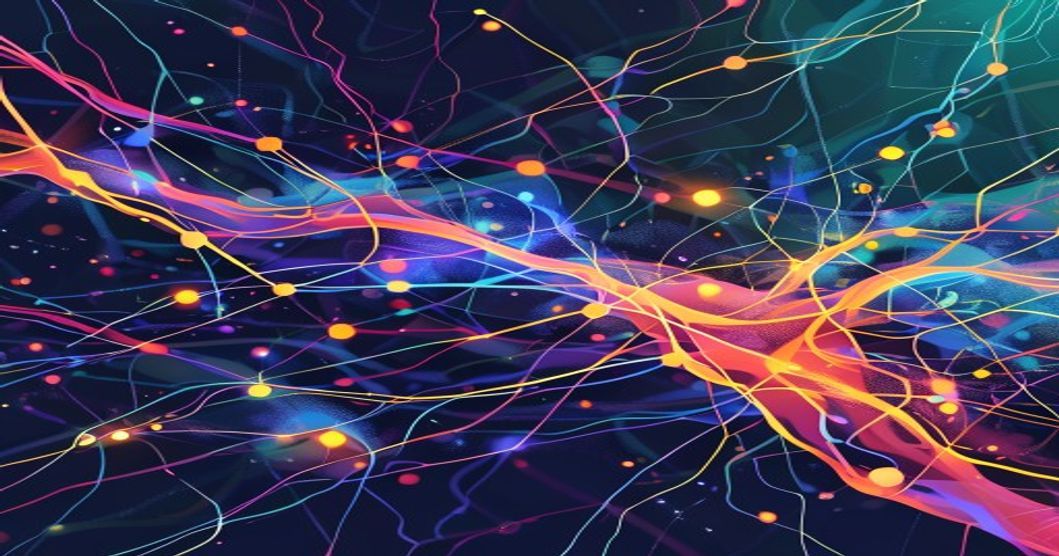
Key Components
- Input Layer: Receives raw data (pixels, text, numbers).
- Hidden Layers: Transform data to recognize features like edges or concepts.
- Output Layer: Produces predictions or classifications.
- Weights & Biases: Learnable parameters that shape the network’s behavior.
Major Types of Neural Networks
Convolutional Neural Networks (CNNs) handle image and video tasks by scanning spatial patterns with filters. Recurrent Neural Networks (RNNs) process sequential data — text or audio — using memory loops. Transformers, the newest architecture, power large language models like GPT and now dominate natural language processing.
Why Neural Networks Matter
These systems detect fraud in milliseconds, translate languages fluently, and can diagnose certain diseases earlier than human experts. Their flexibility — from recognizing a face to writing a poem — makes them the engine behind virtually every modern AI application.
In conclusion: a neural network is a pattern-matching machine that learns from examples rather than explicit programming. Once you grasp the core idea — layers of neurons adjusting weights to reduce error — you hold the key to understanding nearly all modern AI.
