Understanding Neural Networks: A Beginner’s Guide
A neural network is a computing system modeled loosely after the human brain. It learns to recognize patterns by processing data through interconnected layers of artificial neurons. This technology powers everything from facial recognition to language translation, making it a cornerstone of modern artificial intelligence.
Think of it as a complex decision-making machine: raw data enters, passes through hidden layers that extract features, and finally produces an output. The magic happens during training, where the network adjusts its internal connections to minimize errors over thousands of examples.
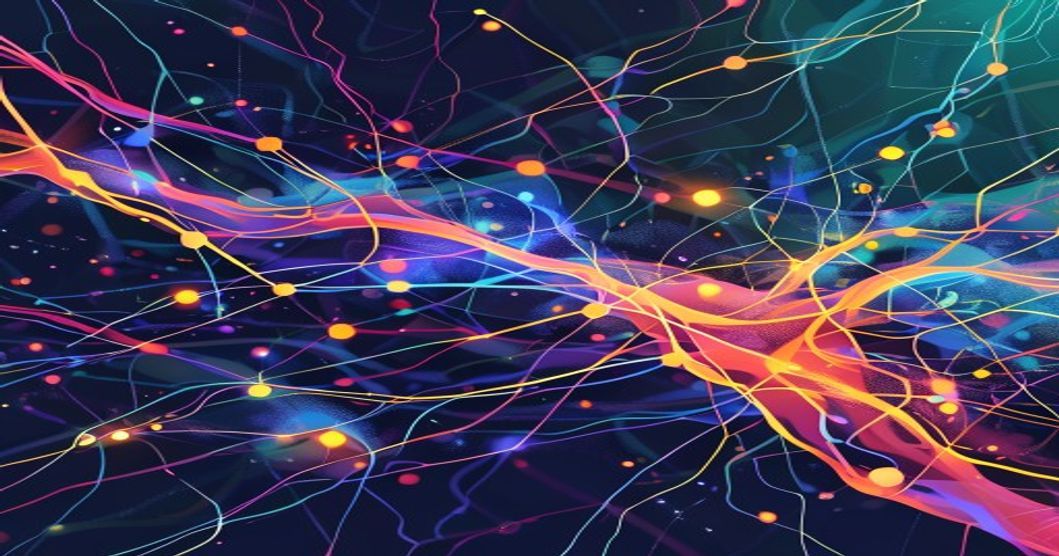
Anatomy of a Neural Network
Every neural network has three fundamental building blocks:
- Input Layer – receives raw data (e.g., pixel values).
- Hidden Layers – one or more layers where mathematical transformations occur; these layers extract patterns like edges, textures, or abstract concepts.
- Output Layer – delivers the final prediction (e.g., “cat” or “dog”).
How Learning Happens
Learning relies on two mechanisms: forward propagation and backpropagation. The network passes data forward, compares the result to the correct answer, then calculates an error. It propagates that error backward to adjust weights (connection strengths) and biases (thresholds), gradually improving accuracy. This iterative process is called training.
Common Types of Neural Networks
Different tasks call for different architectures:
- Feedforward Neural Networks – simplest form, data moves in one direction. Used for basic classification.
- Convolutional Neural Networks (CNNs) – excel at grid-like data such as images. They use filters to detect spatial patterns.
- Recurrent Neural Networks (RNNs) – designed for sequential data like text or time series. They maintain a memory of previous inputs.
Why Neural Networks Matter
Their ability to learn complex, non-linear relationships from large datasets makes them indispensable. From medical diagnostics to autonomous driving, neural networks are transforming industries by automating tasks that once required human intuition.
In short, a neural network is a powerful tool that mimics biological learning. By understanding its components and training process, you can begin to appreciate how machines achieve intelligent behavior.
