Understanding Deep Learning: A Beginner’s Guide
Deep learning is a subset of machine learning that uses multi-layered artificial neural networks to model and understand complex patterns in data. Inspired by the human brain, these networks learn directly from raw inputs like images, text, or sound, automatically extracting features at multiple levels of abstraction. It powers many modern AI applications, from voice assistants to self-driving cars.
At its core, deep learning stacks many layers of neurons, each performing simple mathematical operations. As data flows through the layers, the network progressively learns more abstract representations. The “deep” in deep learning refers to this depth of layers, which enables the model to capture intricate relationships.
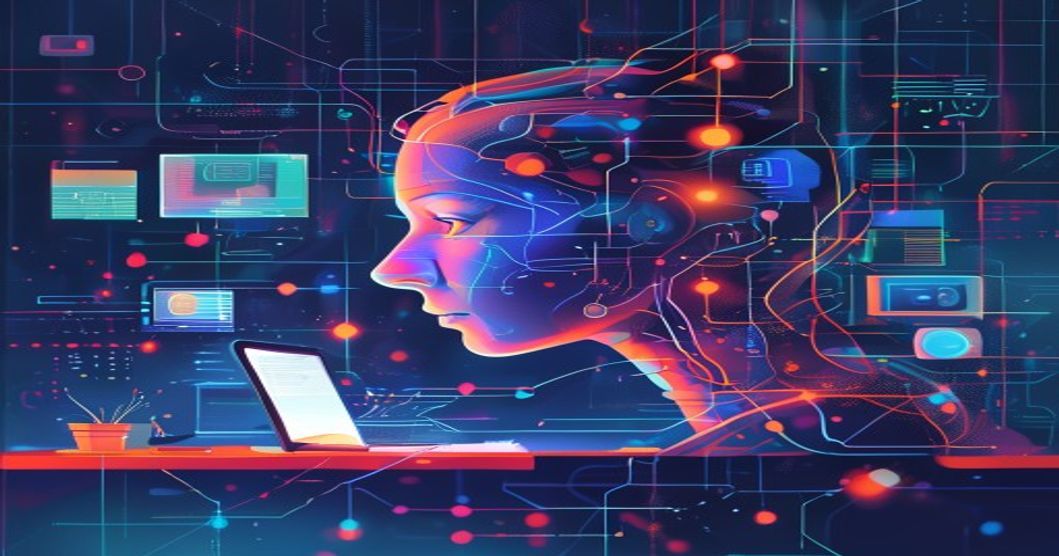
Key Components of Deep Learning
- Neural Networks: Composed of input, hidden, and output layers. Each layer contains neurons connected by weighted edges.
- Activation Functions: Introduce non-linearity, allowing the network to learn complex mappings (e.g., ReLU, sigmoid).
- Backpropagation: The algorithm that adjusts weights by calculating gradients of the loss function, enabling learning from errors.
- Large Datasets & GPUs: Deep learning requires vast amounts of labeled data and parallel computing hardware to train effectively.
How It Differs from Traditional Machine Learning
Traditional ML relies heavily on manual feature engineering—humans hand-craft relevant attributes from the data. Deep learning automates feature extraction, learning optimal representations directly from raw data. This makes it extremely powerful for unstructured data like images, audio, and text, but it also demands more data and computational resources.
Real-World Applications
Deep learning is widely used in: image recognition (medical diagnostics, facial recognition), natural language processing (chatbots, translation), autonomous vehicles (object detection, path planning), and generative AI (creating images, music, or text). Its ability to handle high-dimensional data makes it indispensable in modern AI.
Deep learning is a transformative technology that mimics how humans learn. By stacking layers of neurons, it excels at finding patterns in complex data. While resource-intensive, its automation of feature learning sets it apart—making it the go-to approach for cutting-edge AI innovations.
